How I Paid Off $85,000 in Student Debt
At eighteen I went to university to study engineering with almost no understanding of what that decision would cost. My family went halves with me, which is more help than most people get and more than I appreciated at the time.
On graduation day I owed $84,964.45. Just over $51,000 of it was private loans, which is the expensive, inflexible kind.
Here are the seven things that got rid of it.
1. Know exactly what you have
I could tell you the balance, rate and accrued interest on every single loan, because I built a spreadsheet listing all of them. Balance, loan type, interest rate, interest accumulated so far.
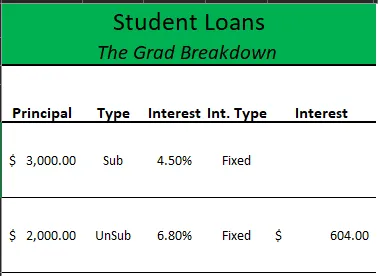
The actual sheet. Nothing clever — principal, subsidized or not, rate, fixed or variable, and interest accrued so far. That last column is the one that stings.
This sounds like busywork. It isn’t. You cannot choose a payoff order until you can see every debt in one place, and most people carrying student loans have never once seen the whole picture on a single screen. Until you do, you’re guessing.
2. Make a plan, then a budget
I started sending out résumés in September of my senior year for a job that wouldn’t start until the following summer. I had an offer in March. That gave me the one number a plan needs: what my income was actually going to be.
From there the budget told me what was left over. My answer was 25% of gross income at the loans, and in some months I pushed it to 34%. That is an aggressive number and it is what a balance that size demands.
3. Expect the plan to change
On paper it worked. Build a $5,000 emergency fund, then throw 25% at the debt, and the loans are gone in four and a half years. I could live with that.
Then I met my girlfriend six months after graduation, got engaged a year later, and married a year after that. Life does not wait for your amortization schedule.
One honest note, looking back. That $5,000 sitting in savings was more than I needed — one or two thousand would have covered me, and the rest could have gone at the loans years earlier. I chose peace of mind and I don’t entirely regret it, but it cost something and I should say so.
4. Build something that keeps you going
This is the part people underrate on a multi-year plan.
I used the avalanche order — highest interest rate first. Normally that’s the order with no built-in reward, because the expensive debt is often the big one and nothing gets crossed off for a long time. I got lucky: my highest-rate loans were also some of the smallest, so I got early wins anyway.
Where luck ran out, I manufactured motivation. Every time a loan cleared, I recorded the date and every remaining balance in that spreadsheet, and built a burn-down chart from it. Watching lines fall to zero did more for my perseverance than any amount of discipline. If nothing got paid off for three to six months, I’d add a row anyway just to show the progress that had happened.
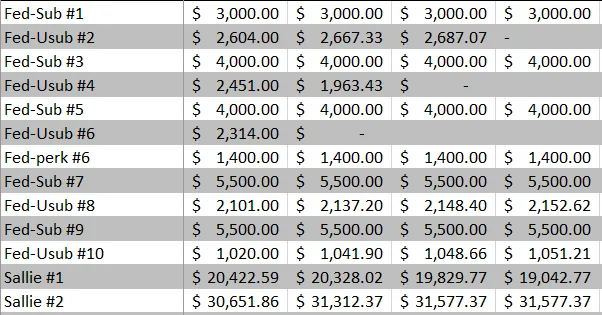
The tracking sheet the chart was built from: every balance, recorded again each time something cleared. Two things are visible here that the story doesn’t tell you. The eleven federal loans add up to $33,890 — the two Sallie Mae lines are the other $51,074.45, and they were most of the hole. And look at the unsubsidized rows moving left to right: several of them grow while I’m busy paying something else. That is what unsubsidized interest does while your attention is elsewhere.
I also told the people supporting me every time something cleared. Saying it out loud makes it real.
5. Grow the income
Your income is the biggest lever you have. Cutting expenses has a floor; earning more doesn’t.
What that looked like for me:
- Bonuses and tax refunds — 80 to 90% straight at the loans.
- Raises — the payment went up, the spending didn’t. That one habit is worth more than it sounds, because lifestyle creep is what quietly eats a raise.
- More education — I worked on a master’s and studied for certifications while my employer paid most of it through tuition reimbursement, which made me worth more at review time.
If you’re stuck, a second job is a blunt tool that works.
6. Use everything in the toolbelt
There are more options here than most borrowers realize.
Deferment. When I went back for my master’s, enrolling at half time moved my loans back into deferred status. That suspended the required payments, so I could aim at whichever loans I chose, and it stopped interest accruing on the subsidized ones.
Employer tuition reimbursement. When work reimbursed me after finishing a course, that money went at the loans too.
Borrowing to refinance. My master’s was funded with private loans, and a private student loan can be written for more than tuition alone — it’s sized to cover housing, books and living costs too. I took a couple of thousand above what school actually cost and used it against my older, higher-rate loans, effectively refinancing them at a lower rate.
A caution on that one, because I’d rather say it than not. Private lenders still have your school certify the amount against its cost of attendance, and the promissory note generally states the money is for educational expenses. Borrowing above what school costs in order to retire other debt can put you offside with those terms, and it raises what you owe either way. Read the loan agreement, and ask your school’s financial aid office before you borrow rather than after.
Tax credits and deductions. The student loan interest deduction covers up to $2,500 of interest a year, and the Lifetime Learning Credit is worth up to $2,000 if you’re back in school. Both phase out above certain incomes and neither lands automatically, so check them against your own return rather than assuming they apply.
7. Time
It takes as long as it takes. More money at the balance shortens it; nothing eliminates it.
So keep your chin up, use every tool you have, and lean on the people around you. When it’s finally gone, celebrate properly. Clearing those loans took a weight off me that I can still feel the absence of, and it permanently changed how I think about money.
If you want to see what your own order and timeline look like, the debt payoff calculator runs both orders side by side with no account and no email. Or talk to us — the first call is free.